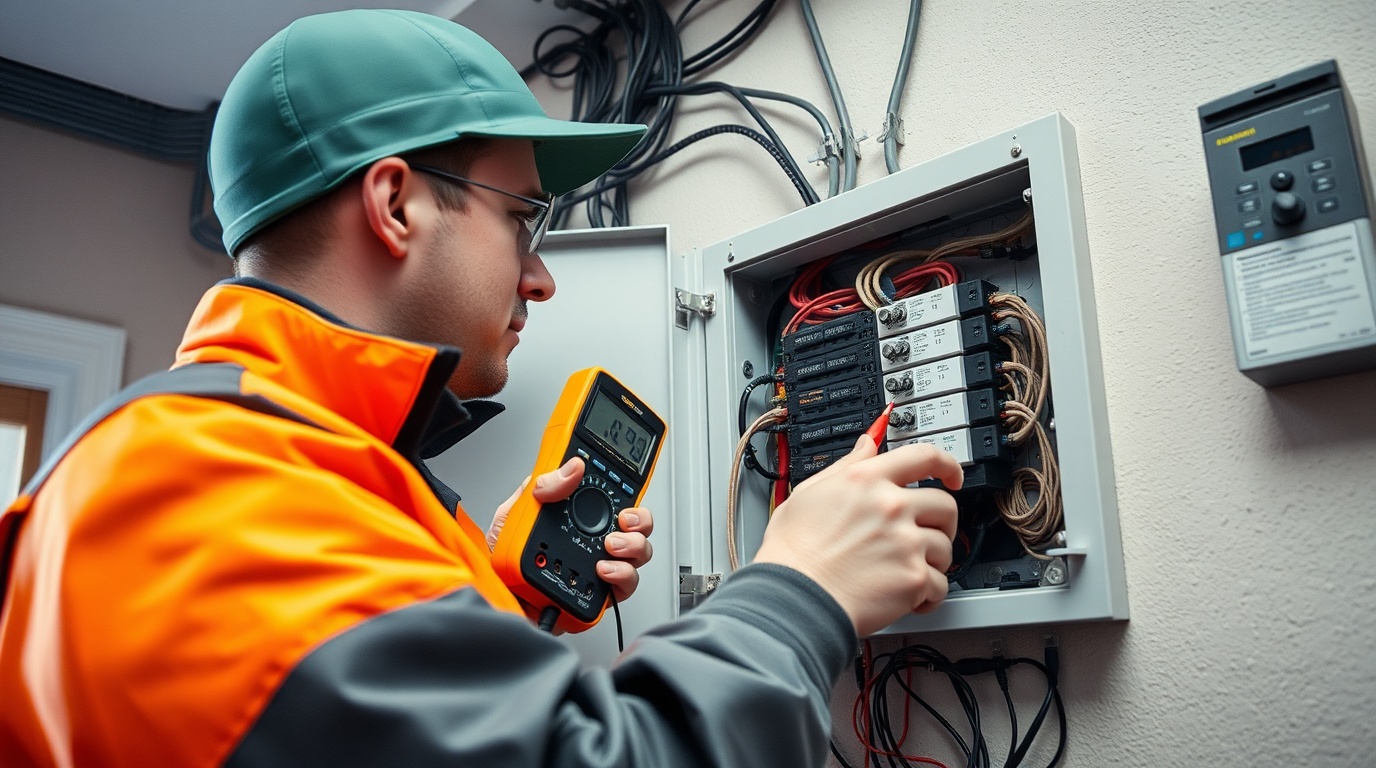
The short answer
The biggest driver of EICR cost is the number of circuits the electrician has to inspect and test, which is why larger and older homes cost more. On top of that, the price rises with property age (older installations take longer and record more observations), region (London and the South East are generally higher), access (a boxed-in consumer unit or awkward loft adds time), and the condition of the installation (a heavily modified or poorly labelled board is slower to work through). Some quotes are also per circuit rather than a flat fee, so a property with many circuits costs more. None of these are hidden — but they explain why a single national price does not exist.
EICR prices vary widely because several things affect how long the inspection takes. Understanding the drivers helps you read a quote and compare on the same basis.
What pushes the price up
- More circuitslonger to test
- Older wiringmore observations
- London / South Easthigher rates
- Awkward accessadded time
- Pricing modelflat fee vs per circuit
The main cost drivers
Most of what moves an EICR price comes down to how long the inspection takes and how much there is to assess:
- Number of circuits: the single biggest factor. Each circuit is tested individually, so more circuits means more time and a higher price. Some electricians quote a base fee plus an amount per circuit beyond a set number.
- Property age: older installations often have outdated wiring, rubber or fabric-insulated cable, or a fuse box without modern RCD protection — all of which take longer to assess and are more likely to record faults.
- Region: labour rates are generally higher in London and the South East than in the Midlands and the North.
- Access and condition: a tidy, well-labelled consumer unit in an accessible spot is quick to work through; a boxed-in board, a cluttered loft or a maze of unlabelled circuits slows the job down.
These factors compound. An old, large house in the South East with unlabelled circuits behind a boxed-in board hits several of them at once, which is why it can cost two or three times what a small modern flat does. The figure is not arbitrary — it tracks the genuine work involved in testing the installation thoroughly to BS 7671, the 18th Edition Wiring Regulations.
| Factor | Effect on price | Why |
|---|---|---|
| More circuits | higher | each is tested individually |
| Older property | higher | more to check, more faults likely |
| London / South East | higher | regional labour rates |
| Difficult access | higher | more time on site |
| Modern, tidy install | lower | faster to inspect |
General UK guidance on EICR cost drivers. Sources: Checkatrade and MyJobQuote cost guides.
Flat fee versus per-circuit pricing
Some electricians charge a flat fee for a typical property, while others quote a base price plus a charge per circuit above a set number. Neither is automatically better value — what matters is that the quote states the scope clearly. A flat fee is simple and predictable for a standard home, but it can quietly assume an 'average' property, so an unusual one may not fit. A per-circuit quote is more transparent for a property with an unusual number of circuits, because you pay in proportion to the size of the installation.
If a figure looks unusually low, check what it actually covers: whether it caps the number of circuits, excludes certain checks, or is inspection-only with VAT added later. A low headline price that leaves out half the circuits is not really lower — it is just a smaller job described as a whole-property EICR. The most reliable comparison is between quotes that all cover the full installation, every circuit, the inspection and the written report, with VAT and any certificate fee included.
Things that do not usually change the price much
A common worry is that finding faults makes the EICR itself dearer — it does not. The inspection fee covers the assessment and report whatever the result; it is the remedial work to fix any C1 (danger present) or C2 (potentially dangerous) that is quoted and charged separately. So a property that turns out to need work does not pay more for the inspection — it pays the same inspection fee, plus a separate, itemised cost for the remedials once they are known.
Likewise, the number of bedrooms only matters insofar as it tracks circuit count, and the value of the property is largely irrelevant — the electrician is pricing the work of testing the wiring, not the postcode's house prices. The fee is about the size and complexity of the installation and the time on site, not the outcome of the report or the worth of the home. Understanding this helps you spot a quote that is priced fairly against the actual scope rather than padded for an expensive-looking property.
The same logic applies to the result of the report. Whether the installation comes back satisfactory or unsatisfactory does not change the inspection fee, because the electrician has done the same work either way — the difference shows up only in the separate, itemised cost of any remedial work afterwards. So you should never feel that a property is being penalised at the inspection stage for having faults; the fee reflects the time spent testing, not the verdict reached. If a quote appears to vary with the expected condition of the property rather than its size and complexity, that is a sign to ask the electrician to explain how the figure was reached.
How to keep the cost reasonable without cutting corners
There are legitimate ways to keep an EICR's cost sensible. Making sure the consumer unit is accessible and clearing space around sockets before the visit saves the electrician time. Knowing roughly how many circuits your board has, and mentioning the property's age, lets them quote accurately rather than padding for the unknown. Booking with a registered electrician — one signed up to a competent-person scheme such as NICEIC or NAPIT — means the report is properly carried out and certified, which matters more than shaving a few pounds off the fee.
What is not worth doing is choosing purely on the lowest headline price without checking the scope. An EICR that skips circuits, rushes the testing, or omits the formal report is a false economy, especially for a landlord who needs a valid, defensible document. The most affordable genuine EICR is one priced fairly for the full installation by a competent electrician — not the lowest-cost-looking quote that turns out to cover less than the whole property. Spending a little time clarifying scope up front usually produces a fairer, more comparable figure.
Reading a quote so you compare like for like
Because there is no single national EICR price, the practical skill is reading two or three quotes side by side and making sure they describe the same job. The questions that actually matter are straightforward: does the figure cover every circuit in the property, or does it cap the count and treat extra circuits as an add-on? Is it inspection-only, or does it bundle in minor remedials and re-testing? Is VAT included in the headline, and is there a separate fee for issuing the certificate or a digital copy of the report? Two quotes that look pounds apart can turn out to be the same once these are aligned, and a figure that looked low can turn out to assume a smaller installation than you actually have.
A useful habit is to ask each electrician to confirm the scope in writing before you book — even a short email listing the number of circuits, whether VAT applies, and what happens if remedial work is found. That protects you from a quote that quietly leaves out part of the property, and it gives the electrician the information they need to price accurately rather than defensively. The factors that push an EICR price up are all legitimate and visible once you know to look for them; the goal is not to find the lowest number, but to find the fair number for the genuine scope of work your installation needs.
Frequently asked questions
What is the biggest factor in EICR cost?
The number of circuits the electrician has to inspect and test. Each circuit is checked individually, so the more circuits a property has, the longer the visit takes and the higher the price — which is why larger and older homes cost more.
Does finding faults make the EICR more expensive?
No. The inspection fee covers the assessment and report regardless of the result. It is the remedial work to put right any C1 or C2 fault that is quoted and charged separately, not the EICR itself.
Are EICRs dearer in London?
Generally, yes. Labour rates in London and the South East tend to be higher than in the Midlands and the North, so the same size of property usually costs a little more to inspect there.
Sources & further reading
Figures on this page are typical UK ranges drawn from published sources and depend on your specific property. They are guidance, not a quotation. Legal duties are summarised for guidance — confirm the current position on GOV.UK.