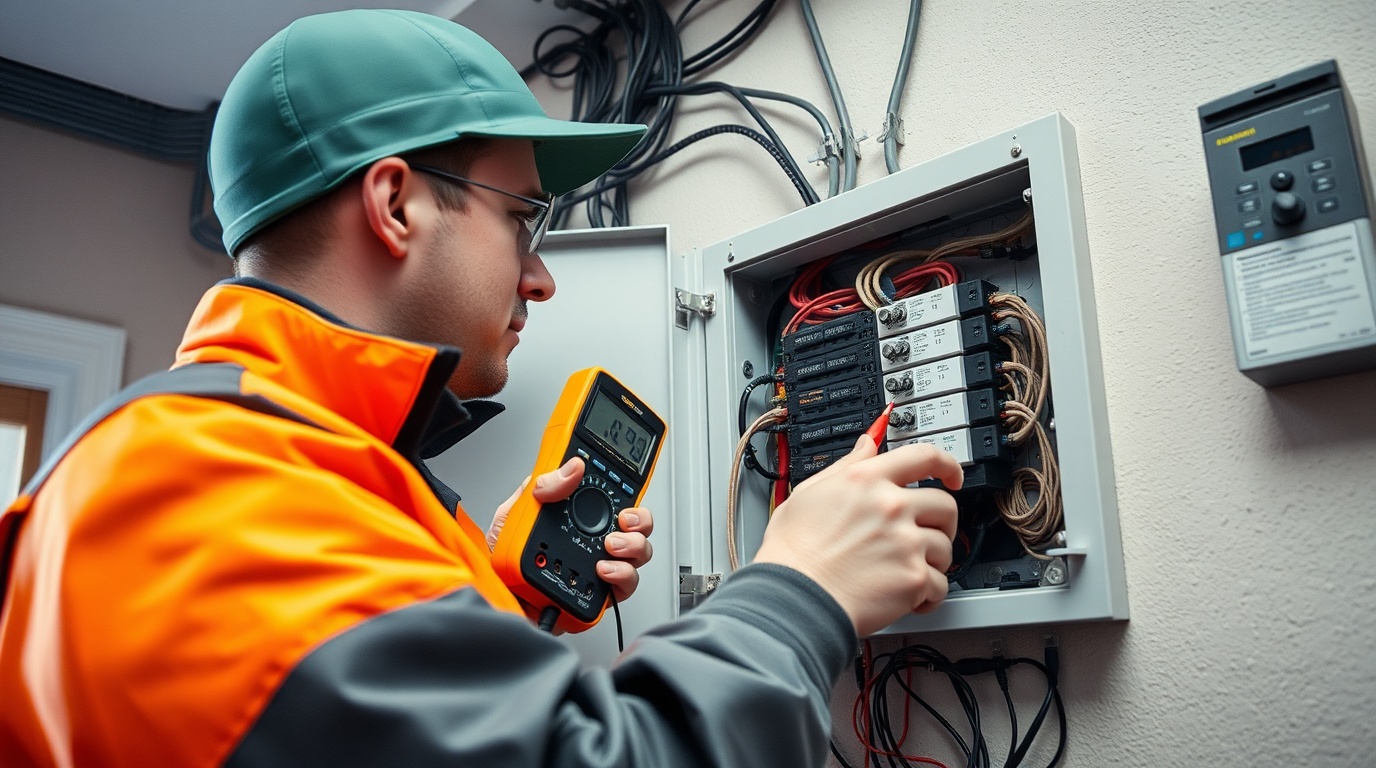
The short answer
The clearest signs a UK house may need rewiring are old cable types (rubber, lead or fabric-covered cable, common before the 1960s–70s), an old fuse board with rewireable fuses rather than circuit breakers, and a lack of RCD protection. Day-to-day warning signs include breakers or fuses that trip repeatedly, flickering or dimming lights, a burning or fishy smell near sockets, warm, scorched or discoloured fittings, and a shortage of sockets forcing heavy use of extension leads. The reliable way to confirm it is an Electrical Installation Condition Report (EICR) to BS 7671, which records faults as C1, C2, C3 or FI codes.
No single sign on its own means a full rewire is due, but several together — especially old cable plus an old board — are a strong prompt to get the installation inspected. The points below are the ones electricians and an EICR most often pick up.
Common warning signs
- Cable typeRubber, lead or fabric sheathing
- Fuse boardRewireable fuses, no RCD
- BehaviourFrequent tripping, flickering
- PhysicalScorch marks, burning smell
- Confirmed byAn EICR to BS 7671
Physical signs you can see and smell
Some clues are visible without lifting a single floorboard. The cabling and the consumer unit (fuse board) are the biggest tells, because their materials date the installation.
- Old cable sheathing: rubber, lead or fabric-covered cable was common up to the 1960s and 1970s. Rubber insulation becomes brittle and cracks with age. Modern cable uses grey or white PVC.
- An old fuse board: a board with ceramic rewireable fuses, a wooden back, cast-iron switches or a mix of mismatched units usually points to an installation that has never been fully updated.
- No RCD protection: the absence of any residual current device — the trip that protects against electric shock — is a common feature of older installations.
- Scorch marks, discolouration or melted fittings: brown or black marks around sockets and switches, or a faint plastic-burning smell, indicate overheating and need urgent attention.
- Round-pin sockets, old light switches or no earthing to certain points are further signs the wiring predates current standards.
Behavioural signs in daily use
Other warning signs only show up when the installation is under load. Individually they can have minor causes, but a pattern of them is worth investigating.
- Frequent tripping: a breaker or RCD that trips repeatedly, or fuses that blow often, suggests overloaded or faulty circuits.
- Flickering or dimming lights, especially when an appliance such as a kettle or shower switches on, can point to loose connections or undersized circuits.
- Buzzing or crackling from sockets, switches or the consumer unit.
- Mild shocks or tingles from appliances, taps or switch plates — a sign of a possible earthing fault that should be checked at once.
- Too few sockets, leading to daisy-chained extension leads and adaptors, which is both a convenience problem and a loading risk.
Age alone is also relevant. Wiring has a working life of roughly 25 to 30 years before insulation and connections degrade, so an installation that has not been touched in several decades is a candidate for assessment even if nothing obvious has failed yet.
The reason a pattern matters more than any single symptom is that most of these signs have innocent explanations in isolation. One bulb flickers because it is loose; a breaker trips once because a kettle and a heater happened to share a circuit; a socket feels warm because a high-load appliance has been running. Taken alone, none of these justifies a rewire. It is when several appear together — flickering across several rooms, repeated tripping on more than one circuit, plus warm or discoloured fittings and an old board behind it all — that the picture shifts from coincidence to a wiring problem worth testing. Treat each sign as a single data point, and look at how many are stacking up before drawing any conclusion about the installation as a whole.
How an EICR confirms whether a rewire is needed
The definitive answer comes from an Electrical Installation Condition Report (EICR), carried out by a qualified electrician to the BS 7671 wiring regulations (18th Edition). Rather than guessing from symptoms, the report tests the installation and records each issue against a standard code: C1 (danger present), C2 (potentially dangerous), C3 (improvement recommended) or FI (further investigation required). An overall result of unsatisfactory means remedial work is needed.
A rewire is not always the outcome. Many EICR faults can be put right by replacing a consumer unit, adding RCD protection or repairing individual circuits. A full rewire tends to be recommended when the wiring itself — the cable insulation — has degraded throughout, or when an old installation accumulates so many C1 and C2 codes that piecemeal repair is no longer sensible. The report gives you the evidence to decide.
This is why the warning signs above are better treated as prompts to inspect rather than diagnoses in themselves. A single flickering light or an occasional trip can have a trivial cause, and even an old fuse board does not automatically mean the cable behind the walls has failed. What the EICR adds is measurement: it tests the insulation resistance of each circuit, checks the earthing and bonding, and confirms whether protective devices actually operate. Those numbers turn a hunch — "this wiring looks old" — into a documented verdict that distinguishes between an installation that merely looks dated but tests soundly and one that is genuinely at the end of its life. It is the difference between replacing wiring because of how it looks and replacing it because the evidence shows it needs to go.
How the age of a property changes the odds
While condition matters more than age, the era a home was wired in is a strong guide to what an inspection is likely to find, because wiring standards and materials have changed considerably over the decades.
- Pre-1960s: installations from this period may still have rubber, lead or fabric-sheathed cable, which becomes brittle and cracks. Round-pin sockets and an antique fuse board are common. These homes are the strongest candidates for a full rewire unless they have already been updated.
- 1960s–1980s: often wired in early PVC cable. Many of these installations are reaching or have passed the typical 25–30 year working life, and frequently lack RCD protection. They may need a consumer unit upgrade and partial work, or a rewire depending on condition.
- 1990s onwards: generally PVC-insulated and closer to modern standards, though older boards may still lack the RCD protection now expected. Faults here are more often localised than wholesale.
If you do not know when your home was last rewired, the consumer unit is a useful clue: a modern board with circuit breakers and clearly labelled RCDs suggests recent work, while a board with rewireable fuses points to an installation that has not been fully updated. None of this replaces an EICR, but it helps set expectations before one is carried out.
Frequently asked questions
At what age does a house usually need rewiring?
There is no fixed age, but wiring typically lasts around 25 to 30 years before insulation and connections degrade. Homes wired before the 1970s, or that still have the original fuse board and cabling, are the most likely candidates and are worth having inspected.
Can an electrician tell if I need a rewire without testing?
They can spot strong indicators — old cable, an outdated board, no RCD — on a visual check, but they cannot confirm the condition of the wiring without testing. An EICR measures insulation resistance and earthing and gives a reliable, coded verdict.
Is flickering lights always a sign of bad wiring?
Not always. Flickering can be a faulty bulb, a loose lamp connection or a supply issue. But persistent flickering across several fittings, especially with other symptoms like tripping or warm sockets, is worth having an electrician investigate.
Sources & further reading
- Electrical Safety First — signs of an electrical problem
- NICEIC — find a registered electrician and EICR guidance
Figures on this page are typical UK ranges drawn from published sources and depend on your specific property. They are guidance, not a quotation. Legal duties are summarised for guidance — confirm the current position on GOV.UK.