The short answer
You are not legally required to have an EICR when buying a house, but it is strongly advised, especially for an older property or one with no recent electrical inspection. A standard homebuyer survey or valuation does not test the electrics — it may note visible concerns but will usually recommend a specialist check rather than carry one out. An EICR gives you an independent assessment of the condition of the fixed wiring and consumer unit before you commit, flagging any C1 or C2 faults that could mean significant remedial cost. Arranging one during the buying process means you understand what you are taking on, and can factor any work into your decision. The seller is under no general obligation to provide one.
An EICR is not part of the standard conveyancing process, but it can be one of the more useful checks a buyer makes — particularly on an older home. Here is why, and how it fits in.
EICR when buying
- Legally required?no
- Advisable?yes, especially older homes
- Survey tests electrics?no — recommends a check
- What it revealswiring & consumer unit condition
- Who arranges itusually the buyer
Why it is worth doing
Electrical problems are expensive and largely hidden. Worn wiring, an outdated consumer unit without RCD protection, or unsafe DIY alterations are not obvious on a viewing, and putting them right can run from a few hundred pounds to thousands for a rewire. An EICR carried out before you exchange gives you an impartial picture of the installation's condition, recorded against the C1, C2 and C3 codes. If it comes back unsatisfactory, you know there is remedial work to budget for, or potentially to raise with the seller. On an older home in particular, that information is worth having before you are committed.
The value lies in turning an unknown into a number. Before an inspection, the state of a property's wiring is guesswork — it might be a recently rewired installation with a modern board, or it might be decades-old cabling with no RCD protection and a fuse box that belongs in a different era. Those two scenarios sit behind the same painted wall and look identical on a viewing, yet one carries little cost and the other could mean a four-figure rewire. An EICR resolves that uncertainty into specifics: which circuits are sound, what is merely an improvement recommendation, and what is a genuine danger that has to be addressed. For the price of an inspection, you replace a vague worry with a documented position you can plan around.
It also gives you options you would not otherwise have. A report that comes back with C1 or C2 faults is not just a warning — it is leverage and a planning tool. You can use the findings to renegotiate the price, ask the seller to carry out and certify the work before completion, or simply walk in with your eyes open and a budget set aside. Discovering the same faults after you have moved in offers none of those choices: the cost is yours, the disruption is yours, and the seller is long gone. The whole case for inspecting before you exchange rests on the fact that information has value precisely when you can still act on it.
An EICR is not a survey
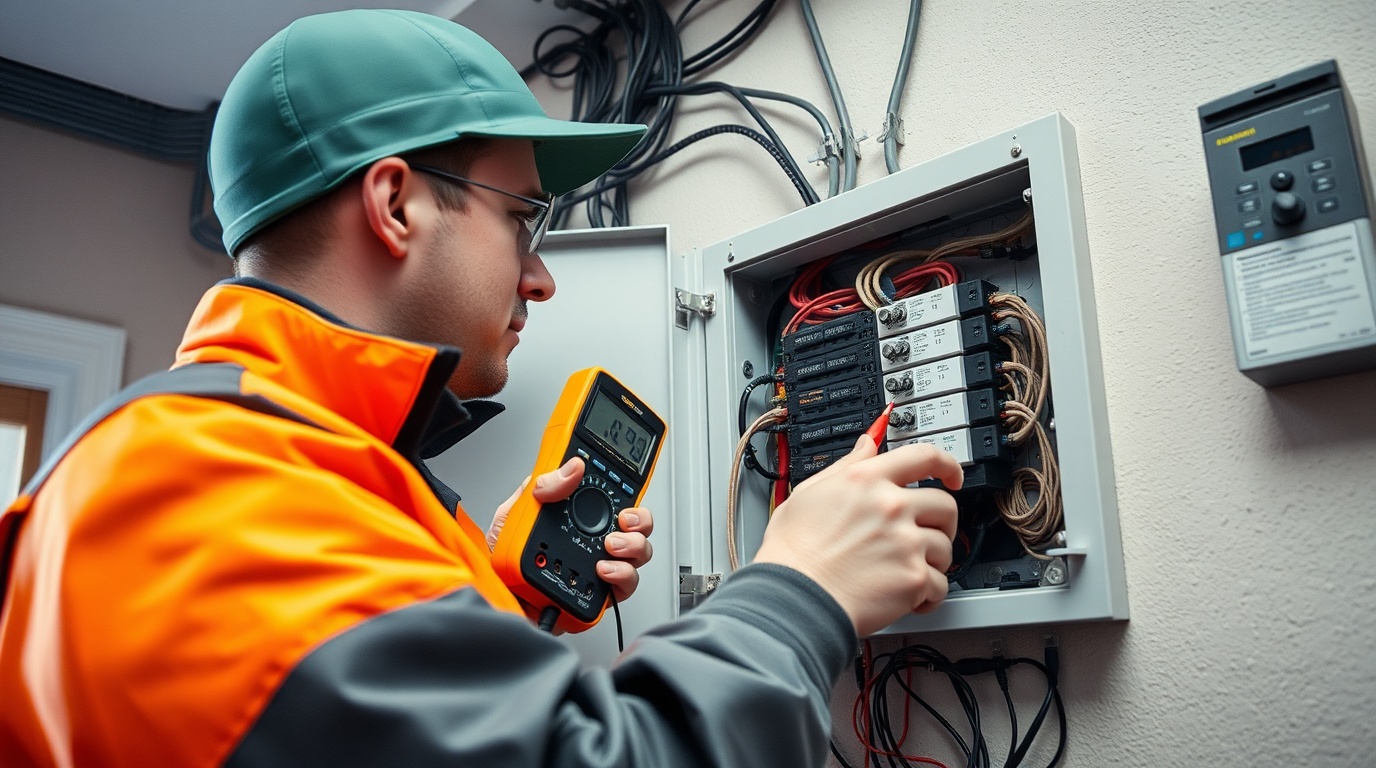
Do not assume your homebuyer survey covers the electrics — it does not test them. A surveyor inspects the structure and condition of the building and may flag a visibly old fuse box or obvious concerns, but they will normally recommend a specialist electrical inspection rather than carry one out. An EICR is that specialist inspection: a registered electrician physically testing the circuits to BS 7671, the 18th Edition Wiring Regulations. The two are complementary — the survey for the building, the EICR for the wiring — and a thorough buyer arranges both where the property warrants it.
The distinction is more than technical, because the two assessments answer different questions and require different skills. A surveyor is qualified to judge damp, subsidence, roof condition and structural soundness; they are not there to isolate circuits, measure insulation resistance or confirm that an RCD trips within the required time. When a survey says the electrics ‘appear dated’ and recommends further investigation, that is the surveyor doing their job correctly — flagging a matter outside their remit for the appropriate specialist. Reading that line as reassurance, or as a substitute for an inspection, is a common and costly misreading. The survey points at the wiring; only the EICR actually tests it.
| Check | Covers | Tests electrics? |
|---|---|---|
| Mortgage valuation | lender's value | no |
| Homebuyer survey | building condition | no — may recommend a check |
| Building survey | detailed structure | no — may recommend a check |
| EICR | fixed wiring & circuits | yes, fully |
General UK guidance. Source: Electrical Safety First; RICS survey guidance.
When to arrange one
The practical time is after your offer is accepted but before you exchange, alongside your survey, so any findings can inform your decision while you can still act on them. You will usually need to arrange access through the estate agent. Bear in mind the seller is under no general duty to provide an EICR for a sale, so if there is not a recent one on record, commissioning your own is the way to get a current, independent report. If the property has been let recently, ask whether a landlord EICR exists — it may still be in date and give you a head start.
There is a balance to strike on timing and cost. Commissioning an EICR before your offer is even accepted risks paying for an inspection on a purchase that falls through, so most buyers wait until the sale is reasonably secure but well before exchange — the window in which findings can still feed into negotiation. Allow a little lead time, too: an inspection has to be booked, access arranged through the agent, and the report read and digested, none of which happens overnight in a moving chain. On a property where the electrics are an obvious question mark — an older home, an inherited property that has sat empty, or one with visible signs of amateur alterations — the modest fee and short delay are easily justified by the size of the risk being removed.
Reading the result and what comes next
If the EICR comes back satisfactory, you have a clean, documented baseline for the installation and little more to do than file the report and note its recommended next-inspection date. An unsatisfactory result is where the report earns its keep, and the codes tell you how to weigh it. A C3 is an ‘improvement recommended’ observation — the installation is not unsafe, so a C3 alone does not make a report unsatisfactory, and you can address these at leisure. A C2 (‘potentially dangerous’) or C1 (‘danger present’) does make a report unsatisfactory and points to work that genuinely needs doing, with a C1 being an immediate concern. An FI code flags something that needs further investigation before it can be coded properly.
Knowing which codes are present lets you respond proportionately rather than panicking at the word ‘unsatisfactory’. A property with a couple of C2s and some C3s is not a disaster — it is a normal older home with identifiable, quotable work, and you can decide whether to ask the seller to put it right and certify it, adjust your offer, or take it on yourself with a budget in hand. What you should not do is treat an unsatisfactory report as a reason to proceed blind; the point of inspecting before exchange is that every option, from renegotiation to walking away, is still open to you while you hold the information and have not yet committed. Once you complete, the wiring — and its faults — are yours.
Frequently asked questions
Is an EICR required when buying a house?
No, an EICR is not legally required to buy a house, but it is strongly advised, especially for older properties. A standard survey does not test the electrics, so an EICR is the way to learn the condition of the wiring before you commit.
Does a house survey check the electrics?
No. A homebuyer or building survey assesses the structure and condition of the property and may flag an obviously old fuse box, but it does not test the electrical installation. Surveyors usually recommend a separate specialist inspection — an EICR.
Does the seller have to provide an EICR?
Generally no. A seller of an owner-occupied home is under no general obligation to provide an EICR. If there is no recent one on record, the buyer can commission their own. A recently let property may already have a landlord EICR still in date.
Sources & further reading
Figures on this page are typical UK ranges drawn from published sources and depend on your specific property. They are guidance, not a quotation. Legal duties are summarised for guidance — confirm the current position on GOV.UK.