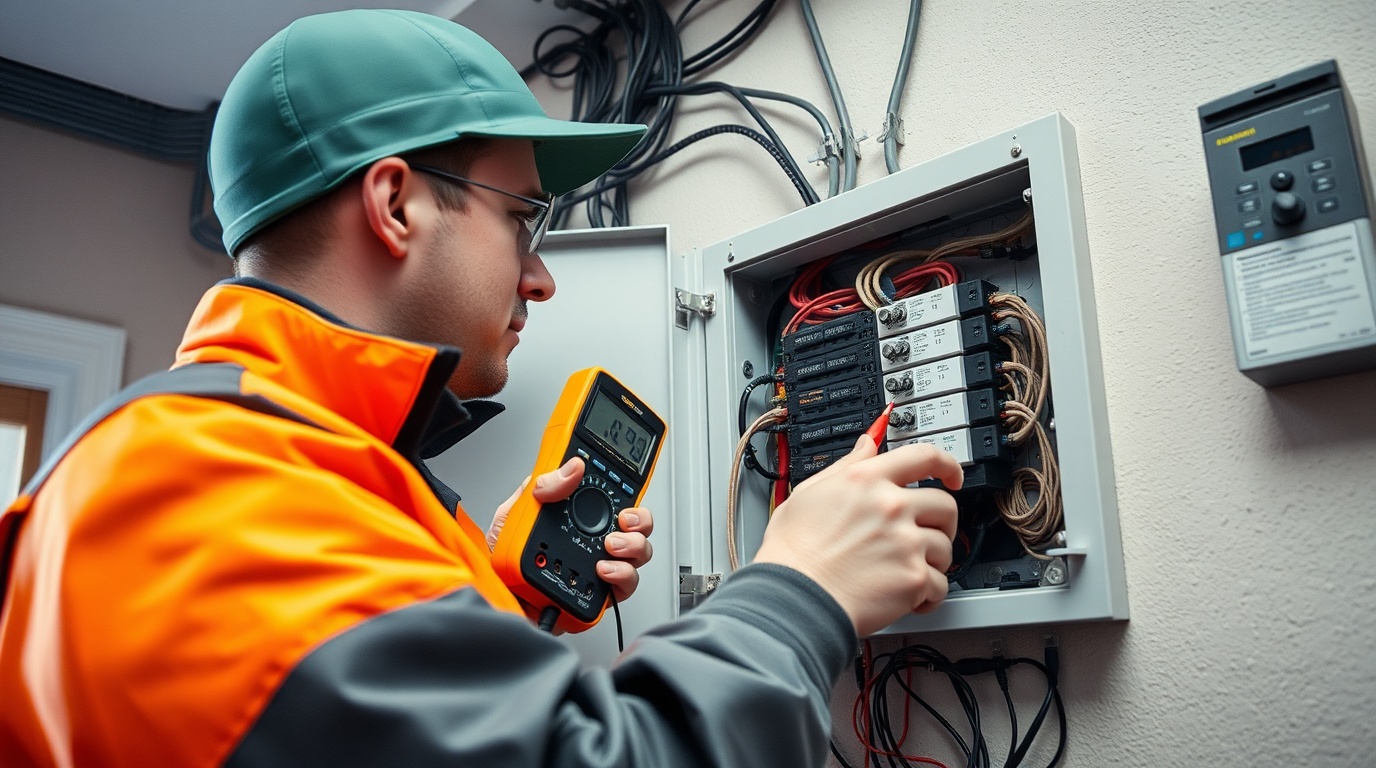
The short answer
Replacing a consumer unit (fuse board) in a UK home typically costs around £350–£700, with a straightforward swap at the lower end and a larger or more complex installation higher. The price covers the new board, the labour to install it, and the testing and certification of the work. A modern unit provides RCD or RCBO protection on the circuits as required by BS 7671, the 18th Edition Wiring Regulations, which is why older boards are often upgraded. Replacing the consumer unit is not the same as a rewire — it changes the board the circuits connect to, not the wiring itself. These are typical ranges for guidance, not quotations.
A consumer unit replacement is one of the more common pieces of electrical work, often prompted by an EICR or an older fuse box without modern protection. The figures below are typical UK ranges for guidance, not quotations.
Typical consumer unit costs
- Straightforward swap~£350–£500
- Larger / complex board~£500–£700+
- Includesboard, labour, testing, certificate
- Modern protectionRCD / RCBO per BS 7671
- Time on sitetypically a day
What the cost includes
A consumer unit replacement is a defined job, which is why it prices more predictably than an open-ended rewire. The figure usually covers the new consumer unit itself, the labour to disconnect the old board and fit the new one, the testing of the circuits once reconnected, and the certification of the work. Modern boards include RCDs or RCBOs that disconnect the supply quickly under a fault, plus correctly rated MCBs for each circuit. Where existing circuits do not meet current standards, the electrician may flag remedial work that adds to the cost before the new board can be signed off.
The board itself is only part of the figure, and often not the largest part. A modern dual-RCD or full-RCBO consumer unit is a metal-clad enclosure with a main switch, the protective devices, and the busbar and connections that tie it together, and the cost of the unit rises with the number of ways it has to provide for. The bigger driver, though, is usually labour: isolating the supply, disconnecting and removing the old board, terminating every circuit into the new one, and then carrying out the full sequence of dead and live testing that the certification requires. That testing is not a formality — it is how the electrician confirms each circuit is safe on the new board — and it is built into the price rather than charged on top.
Two practical factors push a given job up or down within the range. The first is the condition and position of the existing tails and earthing: if the main earthing conductor, bonding, or the supply tails need upgrading to suit the new board, that adds material and time. The second is access and tidiness — a board sited in an awkward cupboard, or one where the existing wiring is short or disorganised, takes longer to work neatly and safely than a clear, well-presented installation. None of this is hidden cost so much as the reason two quotes for 'a new consumer unit' can differ: they may be assuming different amounts of making-good around the board itself.
| Item | Typical cost | Notes |
|---|---|---|
| Standard replacement | ~£350–£500 | like-for-like upgrade |
| Larger property / more circuits | ~£500–£700+ | more MCBs/RCBOs |
| Additional remedial work | variable | if circuits need attention first |
| Time on site | typically 1 day | supply off during the work |
Indicative UK figures for guidance. Sources: Checkatrade and MyJobQuote cost guides.
Why older boards get replaced
Many older homes still have a fuse box with rewireable fuses or a board without RCD protection. These do not meet the protection levels expected by the current edition of BS 7671, and an EICR may record the lack of suitable protection as a fault. Upgrading to a modern consumer unit with RCBO protection means each circuit has both overload and earth-fault protection, improving safety against electric shock and fire. A replacement is also a notifiable job under Part P of the Building Regulations, so it should be carried out and certified by a competent person.
The difference a modern board makes is mostly about how the installation behaves under a fault. An old rewireable fuse simply melts when overloaded, offering no protection at all against the small earth-leakage currents that cause electric shock; an RCD or RCBO, by contrast, detects that imbalance and disconnects in a fraction of a second. Where an older board has a single RCD covering everything, a fault on one circuit trips the whole house, whereas a full-RCBO board isolates only the affected circuit — safer and far less disruptive. This is why the move from an old fuse box to a modern unit is one of the most common upgrades an EICR prompts, and why the work is treated as improving the installation's safety rather than merely maintaining it.
It is worth being clear that a worn or non-compliant board is not always coded the same way on a report. The absence of RCD protection on circuits that need it can appear as a C2 (potentially dangerous) where it makes the installation unsatisfactory, or as a C3 (improvement recommended) where the existing arrangement is not actually dangerous but falls short of the current standard. Reading which code applies tells you whether the board change is something you must do for the report to pass, or a recommended improvement you can plan in your own time — a distinction that matters for both urgency and budgeting.
Consumer unit versus rewire
It is easy to confuse the two, but they are different jobs at very different prices. Replacing the consumer unit changes the board the circuits feed into — typically a day's work and a few hundred pounds. A rewire replaces the cabling throughout the property, which means lifting floors, chasing walls and making good, taking days and costing thousands. A new consumer unit is often part of a rewire, fitted at the end, but on its own it is a far smaller job. An EICR or an electrician's assessment will tell you which your property actually needs.
The confusion matters because the two can be quoted as if they were alternatives when they are not. A new board on sound, modern cabling is a genuine fix that brings the installation up to current protection standards. But fitting a new board onto old, deteriorated wiring does not cure the wiring itself — and, as the callout notes, it can actually expose faults the old fuse box was masking. Where a report flags problems across many circuits rather than just the board, a new consumer unit alone may be the wrong spend, because the underlying cabling is what needs attention. This is exactly why the report's coded observations, read circuit by circuit, are the better guide to scope than a headline price.
When a board change is and is not enough
For many homes a consumer unit replacement is exactly the right, proportionate piece of work: the cabling is sound, the earthing and bonding are adequate, and the only meaningful shortfall is an old board without modern protection. In that situation the upgrade resolves the issue cleanly, brings the installation in line with the current edition of BS 7671, and is certified with an Electrical Installation Certificate rather than the EICR itself — because new work is being installed, not merely inspected. The result is a safer installation at a defined, few-hundred-pound cost, with the certificate as the record that the work was done and tested correctly.
Where it is not enough is when the board is only the most visible symptom of a wider problem. If the report records degraded insulation, missing or inadequate earthing, or non-compliant cabling on several circuits, a new board sits on top of those faults rather than fixing them. In the most serious cases the sensible route is a partial or full rewire, with the new consumer unit fitted as the final stage. The way to keep the spend proportionate is to let the inspection drive the decision: a board change for a board problem, and a larger job only where the circuits themselves genuinely need it. Treating the consumer unit replacement as a planned, certified upgrade — rather than a guess at what the property needs — is what keeps it both safe and sensibly priced.
Frequently asked questions
How much does it cost to replace a fuse board?
Replacing a consumer unit, or fuse board, in a UK home typically costs around £350–£700, including the board, labour, testing and certification. A larger property with more circuits, or one needing remedial work first, sits at the higher end.
Is replacing a consumer unit the same as a rewire?
No. A consumer unit replacement changes the board the circuits connect to — usually a day's work for a few hundred pounds. A rewire replaces the cabling throughout the property, taking days and costing thousands. A new board is often fitted at the end of a rewire.
Do I need a certificate for a new consumer unit?
Yes. Replacing a consumer unit is notifiable work under Part P of the Building Regulations, so it should be carried out and certified by a competent person, such as a NICEIC or NAPIT-registered electrician, who issues an Electrical Installation Certificate.
Sources & further reading
Figures on this page are typical UK ranges drawn from published sources and depend on your specific property. They are guidance, not a quotation. Legal duties are summarised for guidance — confirm the current position on GOV.UK.